
If you are looking to invest under ₹30 lakhs, the good news is that the entry point for a branded franchise in India has fallen considerably. Compact formats — takeaway kitchens, small-footprint retail, kiosk models — deliver established brand systems without the capital a full-service outlet demands.
Below are five brands operating in this range, with what each actually costs, the space required, and how the format behaves. These are opportunities we place directly, so the figures are the real ones rather than indicative ranges.
Franchise Options Under ₹30 Lakhs at a Glance
| Brand | Investment | Space | Category | Network |
|---|---|---|---|---|
| Red Box | ₹30 lakhs | 600–800 sq.ft | Indo-Chinese QSR | 60 outlets |
| Cycle World | ₹25–30 lakhs | Retail floor | Bicycle & mobility retail | Expanding |
| Biggies Burger | ₹20–40 lakhs | 800 sq.ft | Burger QSR | 150+ outlets |
| Milky Way | ₹20 lakhs | 500 sq.ft | Ice cream & desserts | 21+ outlets |
| Rolls Mania | ₹17–22 lakhs | 250 sq.ft | Rolls & wraps QSR | 120 outlets |
1. Red Box Franchise — ₹30 Lakhs
Red Box is an Indo-Chinese quick-service brand built for takeaway and delivery rather than dine-in. Founded in Chennai in 2016 and franchising since 2018, it is the most established opportunity in this list and sits at the upper edge of this budget band.
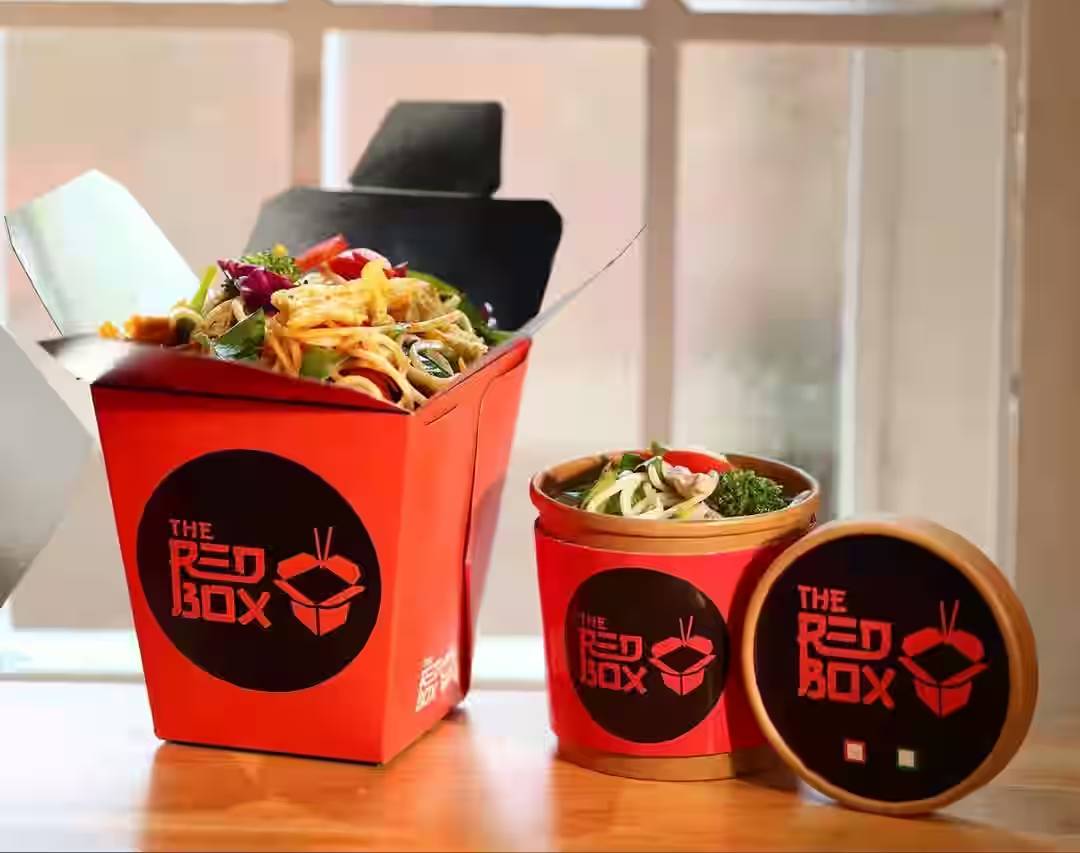
| Investment | ₹30 lakhs |
| Outlet size | 600–800 sq.ft, kitchen with takeaway counter |
| Franchise model | FOFO — franchise owned, franchise operated |
| Staffing | 4–5 employees per outlet |
| Reported ROI | Approximately 2 years across the network |
| Menu price point | ₹150–300 per order |
Network performance: 60 outlets — 55 franchised and 5 company-owned — handling 3,500 to 4,500 cumulative orders per day across Tamil Nadu, Andhra Pradesh, Telangana, Karnataka, Kerala and Puducherry. Around 95% of outlets operate on Swiggy and Zomato, with platform terms negotiated centrally by the brand rather than store by store.
Why the format works at this price: a compact kitchen-and-counter setup carries lower rent, lower fit-out cost and a smaller team than full-service dining. The trade-off is that revenue depends on delivery aggregator performance and local density rather than passing footfall — so site selection matters more here than in formats with a seated audience.
Recognition: ranked #1 Best in Chinese, Chennai at the Swiggy Restaurant Awards 2024; Best Takeaway Concept of the Year at the Franchise India Restaurant Awards 2022. The brand also commits to replacing kitchen staff within 24 hours — attrition is the hidden operating cost in Indian QSR, and a franchisor carrying that burden changes the day-to-day reality of running the outlet.
Best suited for: investors wanting a proven, delivery-led food business who are prepared to be involved in operations. This is FOFO — you run the outlet, the brand supplies the system.
📍 Ideal cities: Chennai, Bengaluru, Hyderabad, Coimbatore
2. Cycle World Franchise — ₹25–30 Lakhs
Cycle World is a retail franchise in the bicycle and urban mobility segment. Because it sits in compact retail rather than food, it suits investors who would rather avoid perishable stock, daily wastage and kitchen staffing altogether.
Retail behaves differently from QSR in ways worth understanding before choosing:
- No spoilage — unsold stock holds its value rather than being written off
- Fewer staff, no kitchen infrastructure, no food safety licensing
- Higher ticket size per sale, at lower transaction volume
- Service and spares income alongside unit sales
The trade-off: working capital sits in inventory rather than turning over daily, so cash flow behaves differently from a food outlet. Plan for slower stock rotation and seasonal demand.
Best suited for: investors wanting a retail format without perishable inventory, and who prefer fewer, higher-value transactions.
📍 Ideal cities: Chennai, Bengaluru, Pune, Hyderabad
3. Biggies Burger Franchise — ₹20–40 Lakhs
Biggies Burger is a homegrown burger QSR with 150+ outlets, operating from an 800 sq.ft format. Burgers carry strong repeat-order behaviour and travel well on delivery platforms, which is what has driven the category’s expansion into tier-2 and tier-3 cities.
The wide investment band reflects format flexibility — a smaller takeaway-led outlet sits near the bottom of the range, while a location with seating and higher footfall pushes toward the top. Confirm which format your city and site actually support before budgeting.
Best suited for: investors in high-footfall urban locations who want an established network behind them.
📍 Ideal cities: Bengaluru, Hyderabad, Pune, Chennai
4. Milky Way Franchise — ₹20 Lakhs
Milky Way operates in ice cream and desserts from a 500 sq.ft format, with 21+ outlets. Dessert formats carry higher gross margins than savoury QSR and run on simpler kitchen operations, which keeps both setup cost and staffing requirements down.
The honest caveat: dessert demand is seasonal and weather-sensitive in a way that meal formats are not. Revenue will not be flat across the year, and your working capital plan should assume that rather than a steady monthly average.
Best suited for: first-time investors wanting a lower entry point with simpler operations.
📍 Ideal locations: malls, high streets, residential clusters near schools and colleges
5. Rolls Mania Franchise — ₹17–22 Lakhs
Rolls Mania is the lowest entry point here at ₹17–22 lakhs, operating from just 250 sq.ft across 120 outlets. The compact kiosk-style format is the reason — minimal rent, minimal fit-out, and a small team.
Rolls and wraps suit takeaway and delivery naturally: quick to assemble, sturdy in packaging, and priced for repeat ordering rather than occasion dining. At 250 sq.ft, site availability is also far less constrained than formats needing 600 sq.ft or more.
Best suited for: investors with limited capital who want to enter branded QSR at the lowest viable ticket.
📍 Ideal locations: food courts, college areas, corporate clusters, metro stations
What the Investment Figure Does Not Include
Every figure above covers setup — fit-out, equipment, initial stock and franchise fee. Three costs are routinely excluded from franchise brochures, and they decide whether your unit economics hold:
- Working capital for the ramp-up. Most outlets take six to eighteen months to reach steady-state revenue. Budget for that gap separately.
- Rent and security deposit. Frequently excluded, and in prime urban locations this can rival the setup cost itself.
- Refurbishment at renewal. Many agreements require a full refit at renewal, at your cost. On a five-year term that expense is closer than it looks.
Ask any franchisor for a line-by-line breakdown separating fit-out, equipment, deposit, franchise fee and working capital before committing. The headline figure in a franchise pitch rarely includes all five.
Why This Budget Range Works Right Now
India’s food services sector is projected to reach roughly USD 93 billion by 2028, with the organised segment growing at about 13% annually and quick-service formats gaining share from casual dining, according to the India Brand Equity Foundation. Compact, delivery-led formats are where that shift is concentrated — which is precisely the segment these five brands occupy.
Tier-2 and tier-3 cities are driving much of that growth, where lower rents make a sub-₹30 lakh outlet materially easier to make profitable than the same format in a metro high street.
Frequently Asked Questions
Which franchise is best under 30 lakhs in India?
There is no single best option — it depends on your capital, your city and how involved you intend to be. Rolls Mania at ₹17–22 lakhs is the lowest entry point, Cycle World at ₹25–30 lakhs suits investors avoiding food operations, and Red Box at ₹30 lakhs is the most established network of the five. Match the format to your situation rather than the headline return.
How much can I earn from a franchise under 30 lakhs?
Returns vary by brand, city and site. Red Box reports an average ROI of roughly two years across its network. Ask any franchisor for the performance range across outlets in cities comparable to yours — and specifically for the weakest performer, because that is the number your own outlet is most likely to resemble.
Is a food or retail franchise better under this budget?
Food formats turn over inventory daily and can break even faster in high-footfall locations, but demand tighter cost control and carry spoilage risk. Retail formats like Cycle World hold stock value and need fewer staff, but tie up working capital for longer. Your available time and risk appetite matter more than the category itself.
Do I need prior experience to run one of these franchises?
No. Established brands provide training, operating systems and launch support — that is the main reason investors choose a franchise over an independent business. Sector experience helps most in formats where quality is personal, and matters less in standardised, process-driven operations.
What should I check before signing the franchise agreement?
Confirm your territory is exclusive and precisely defined, that fees cannot be changed unilaterally, that termination requires a defined cause with time to fix issues, and that you can sell or transfer the business later. India has no dedicated franchise law, so the agreement is the only thing protecting you.
Talk to Us About Any of These Brands
Corporate Culture works directly with these brands on franchise development. We can tell you which territories are open, what the outlet economics actually look like in your city, and — honestly — whether a given format fits your situation or whether you would be better off elsewhere.
📞 Chat with us on WhatsApp: 6381937457
Tell us your budget and preferred city, and we will come back with the brands that genuinely match — not a brochure for all five.