
Choosing the right food franchise models is just as important as understanding the cost to open a food franchise. For first-time franchisees—especially employees and investors transitioning into business ownership—the franchise model determines daily involvement, scalability, staffing needs, and long-term returns. Fast food, fast casual, and QSR are often used interchangeably, but each model operates differently. This guide explains these food franchise models clearly, helping you select the right one based on your goals, budget, and experience.
Fast casual vs QSR (quick service restaurants) differ mainly in food quality, pricing, and dining experience. Fast casual restaurants offer fresher ingredients, higher customization, and a more comfortable dine-in environment at moderate prices. QSRs focus on speed, standardized menus, and affordability, often using drive-thru and counter service models
What Is a Food Franchise Model and Why It Matters?
A food franchise model defines how food is prepared, sold, and delivered to customers. It impacts everything from kitchen setup and staff size to customer expectations and average order value.
For first-time investors, understanding the operational intensity of each model reduces confusion and prevents misaligned investments. The right model should match not only your budget but also your time availability and risk tolerance.
Fast Food Franchise Model Explained
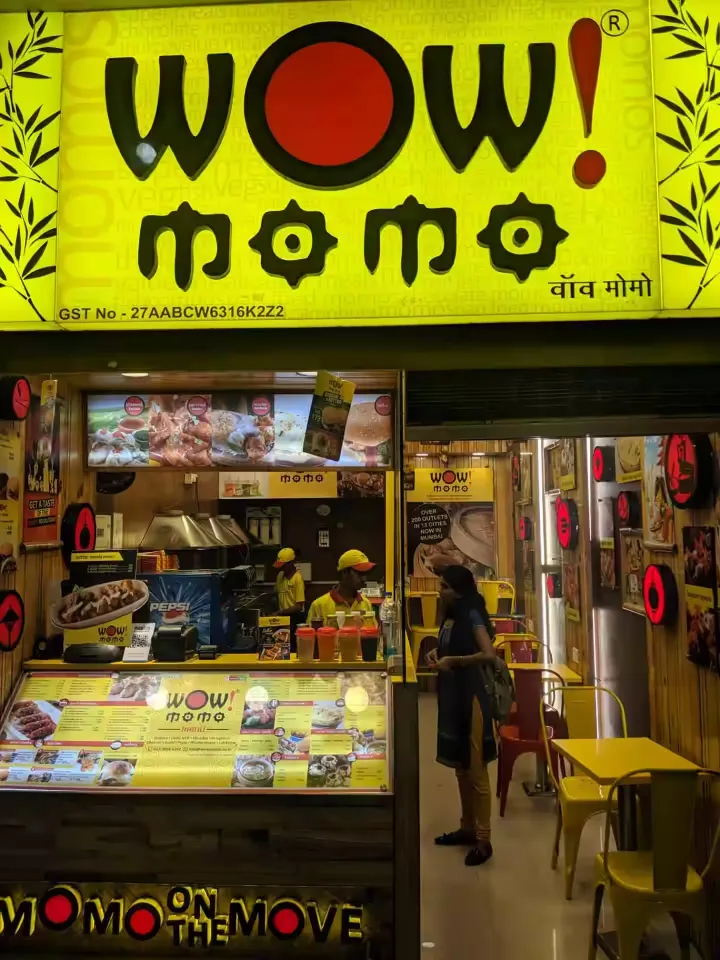
Fast food franchises focus on speed, affordability, and standardized menus. These models are highly system-driven, making them attractive to beginners with limited operational experience.
Fast food outlets typically thrive in high-footfall areas and depend on volume-driven sales rather than high margins per order.
- Simple menus with quick preparation
- Lower ticket size, higher customer turnover
- Strong brand recall and repeat customers
Best for:
First-time franchisees seeking lower complexity and faster learning curves.
Fast Casual Franchise Model Explained
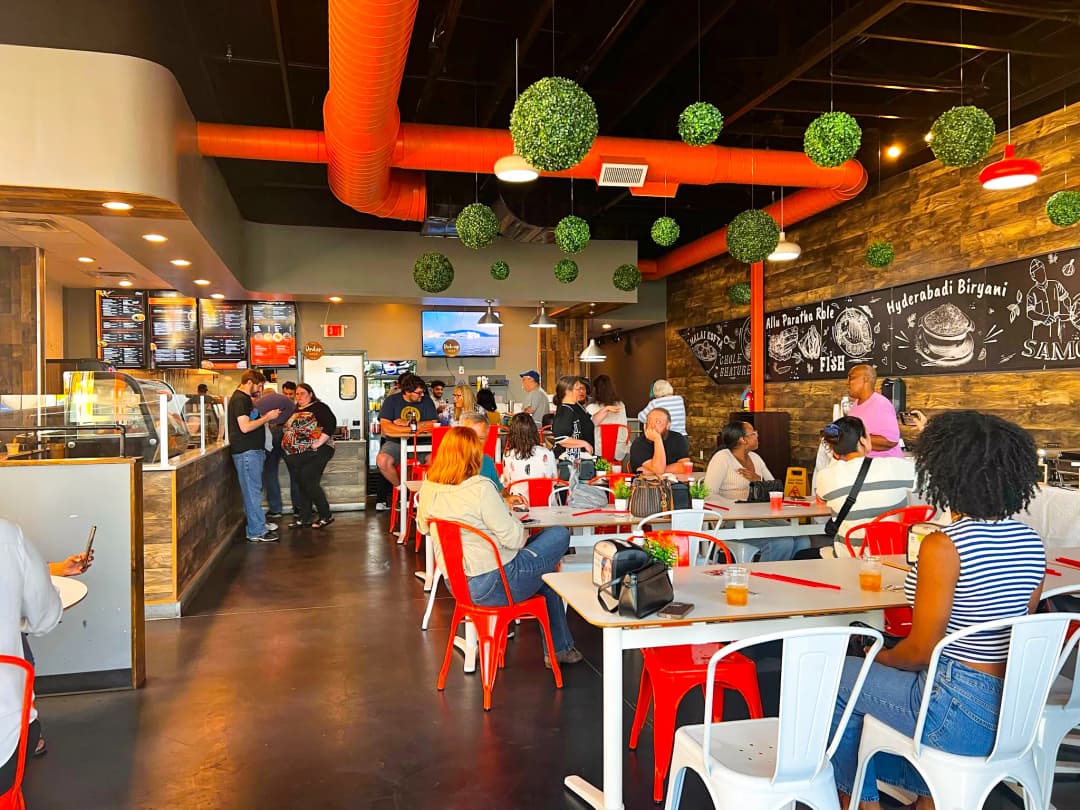
Fast casual franchises bridge the gap between fast food and full-service dining. They offer better ambiance and slightly premium pricing while maintaining efficient operations.
This model appeals to urban consumers who value quality, presentation, and experience without long waiting times.
- Higher average order value
- Better interiors and seating
- Moderate staff and kitchen complexity
Best for:
Business professionals and investors comfortable with moderate involvement and higher setup costs.
QSR (Quick Service Restaurant) Model Explained
QSR is often confused with fast food, but it includes a broader range of formats such as dine-in, takeaway, drive-thru, and cloud kitchens. QSR brands focus heavily on consistency, technology, and scalability.
Many modern QSR brands are designed for multi-unit expansion, making them attractive for long-term investors.
- Standardized systems and SOPs
- Technology-driven ordering and delivery
- Scalable across multiple locations
Best for:
Investors aiming for structured growth and portfolio expansion.
Comparing Fast Food vs Fast Casual vs QSR
While all three models operate in the food franchise ecosystem, they differ significantly in cost, involvement, and scalability.
Before choosing, it’s important to evaluate not just profitability, but also lifestyle alignment and operational comfort.
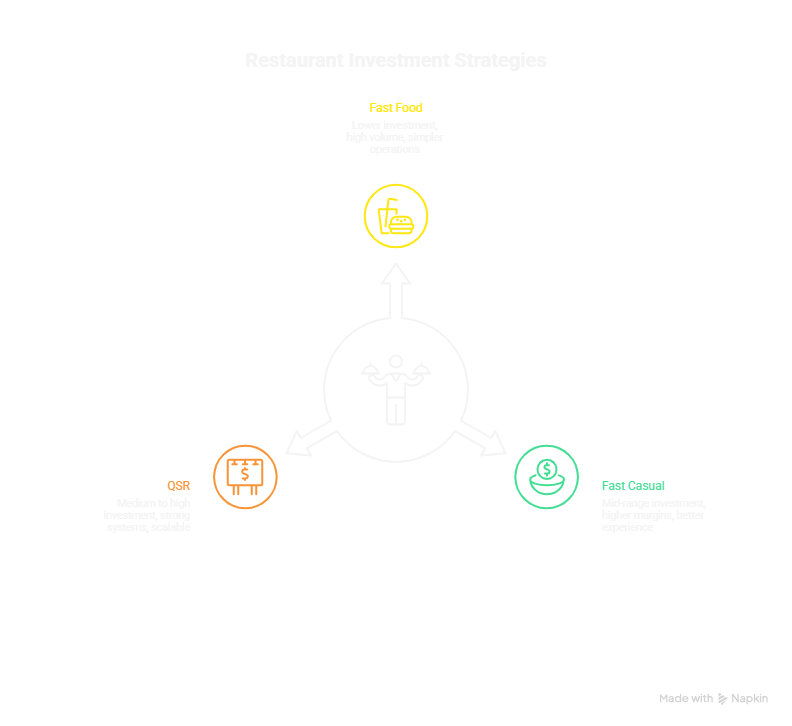
- Fast Food: Lower investment, high volume, simpler operations
- Fast Casual: Mid-range investment, higher margins, better experience
- QSR: Medium to high investment, strong systems, scalable
| Feature | Fast Food | Fast Casual | QSR (Quick Service Restaurant) |
|---|---|---|---|
| Service Style | Counter service, drive-thru common | Order at counter, limited table service | Counter service, minimal interaction |
| Food Quality | Highly standardized, pre-prepared | Fresh ingredients, made-to-order focus | Standardized, optimized for speed |
| Price Range | Low | Mid-range | Low to mid |
| Speed of Service | Very fast | Moderately fast | Extremely fast |
| Dining Experience | Functional, limited ambiance | Better interior, casual dine-in feel | Functional, speed-focused |
| Customization | Limited | High customization | Limited to moderate |
| Typical Customers | Budget & convenience seekers | Quality-conscious but time-sensitive | Speed & convenience seekers |
| Franchise Investment | Lower to mid | Mid to high | Low to mid |
| Technology Use | Drive-thru, kiosks | App ordering, digital menus | Heavy focus on speed tech & automation |
| Examples | McDonald’s, KFC | Chipotle, Panera Bread | Subway, Domino’s |
Best Lowcost food franchise 2025
Which Food Franchise Model Is Best for First-Time Investors?
There is no one-size-fits-all answer. For first-time franchisees aged 34–50, the ideal model balances learning opportunity with financial safety.
Employees transitioning to business often prefer fast food or QSR models, while investors with prior exposure lean toward fast casual or scalable QSR formats.
Key factors to consider:
- Daily involvement level
- Capital availability
- Long-term expansion goals
Popular Brand Examples by Model
India offers several proven brands across all three models. Platforms like CorpCulture curate opportunities that fit different investment ranges and experience levels.
🔗 Explore verified food franchise brands:
https://corpculture.co/food-and-bevaragae/
- Fast Food / Entry-Level: Biggies Burger, Roll Box
- Fast Casual: The Chocolate Room, Wang’s Kitchen
- QSR / Scalable Models: Rebel Foods, Junior Kuppanna
Frequently Asked Questions
What is the main difference between fast casual and QSR?
The main difference between fast casual and QSR (quick service restaurants) is food quality and dining experience. Fast casual restaurants focus on fresher ingredients, higher customization, and a better dine-in atmosphere, while QSRs prioritize speed, affordability, and standardized menus.
Is fast food the same as QSR?
No, fast food and QSR are closely related but not always identical. QSR (Quick Service Restaurant) is a broader category that includes traditional fast food chains. However, some QSR brands may offer slightly upgraded menus or formats beyond classic fast food.
Which is more profitable: fast casual or QSR?
Profitability depends on location, operational efficiency, and brand strength. QSRs typically generate higher sales volume due to speed and lower pricing, while fast casual restaurants often benefit from higher profit margins per order because of premium pricing.
What are examples of fast casual restaurants?
Popular fast casual restaurants include Chipotle and Panera Bread, known for fresh ingredients, customizable meals, and improved dining environments compared to traditional fast food chains.
What are examples of QSR restaurants?
Examples of QSR (Quick Service Restaurants) include McDonald’s, Subway, and Domino’s. These brands focus on fast service, standardized menus, and affordable pricing.
Is fast casual more expensive than QSR?
Yes, fast casual restaurants are generally more expensive than QSRs. They use higher-quality ingredients and offer a better dining experience, which increases average ticket size.
Conclusion
Understanding food franchise models helps first-time investors choose a business structure that aligns with their budget, lifestyle, and growth ambitions. Whether you select fast food, fast casual, or a QSR model, clarity on operations and expectations is essential for success. Combined with a clear understanding of the cost to open a food franchise, selecting the right model sets the foundation for a sustainable and rewarding business journey.